Limvo — running a salon, minus the paperwork
Problem
The front desk runs on paper, memory, and trust — and the owner can’t see the business unless they’re standing in it.
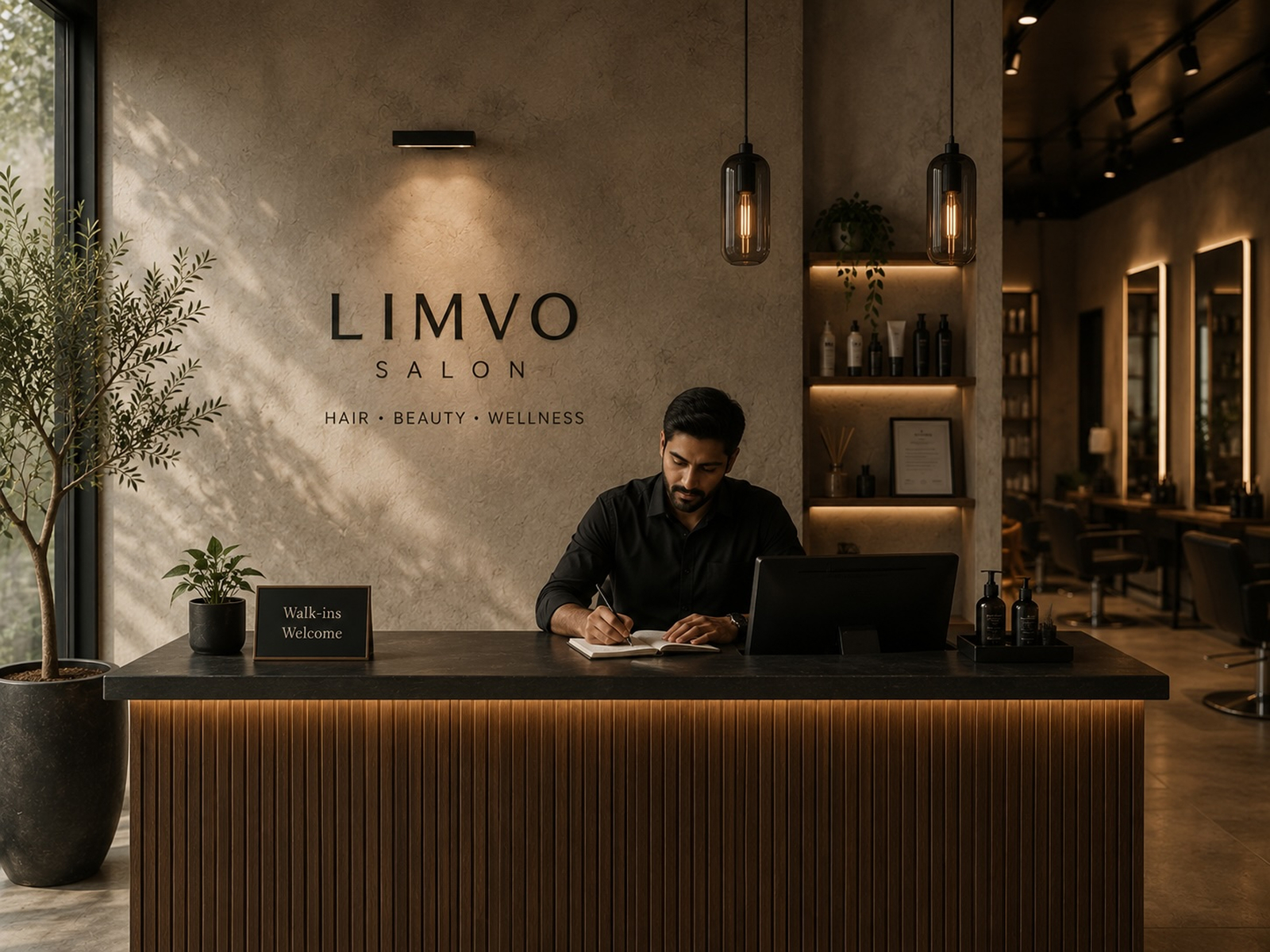
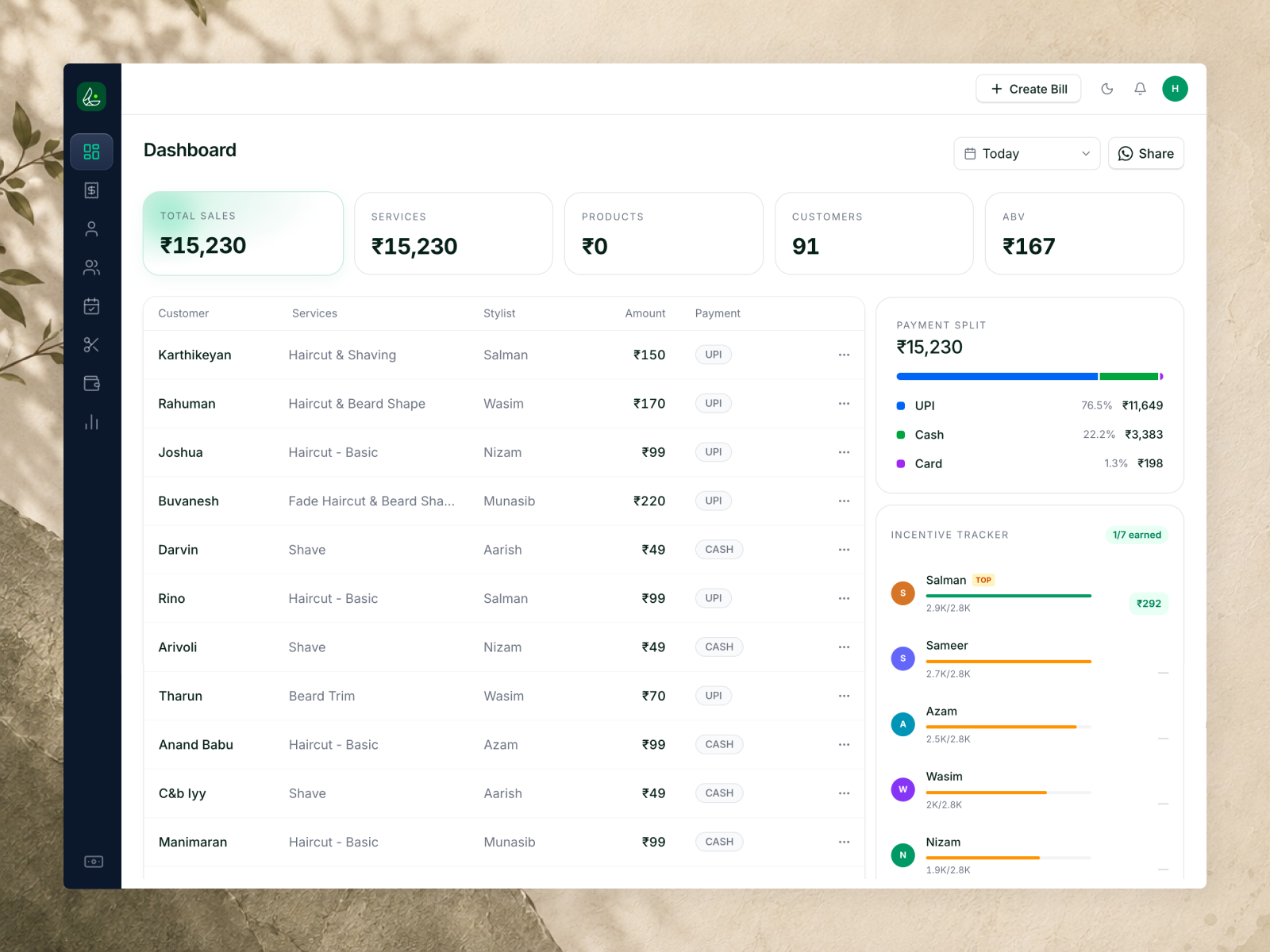
Field research
Designed on the floor of a working salon, not from surveys.
One manager owns the whole day
So “close shift” = “close day”. One action.
Tips aren’t revenue
Modeled as pass-throughs — generic POS gets this wrong.
Owner money ≠ manager money
This boundary shaped the whole permissions model.
Honest numbers only
No inventory costing → show service profit, not a fake total.
Core flow — billing
Fast enough to use with a client waiting. Under ten seconds, start to printed bill.
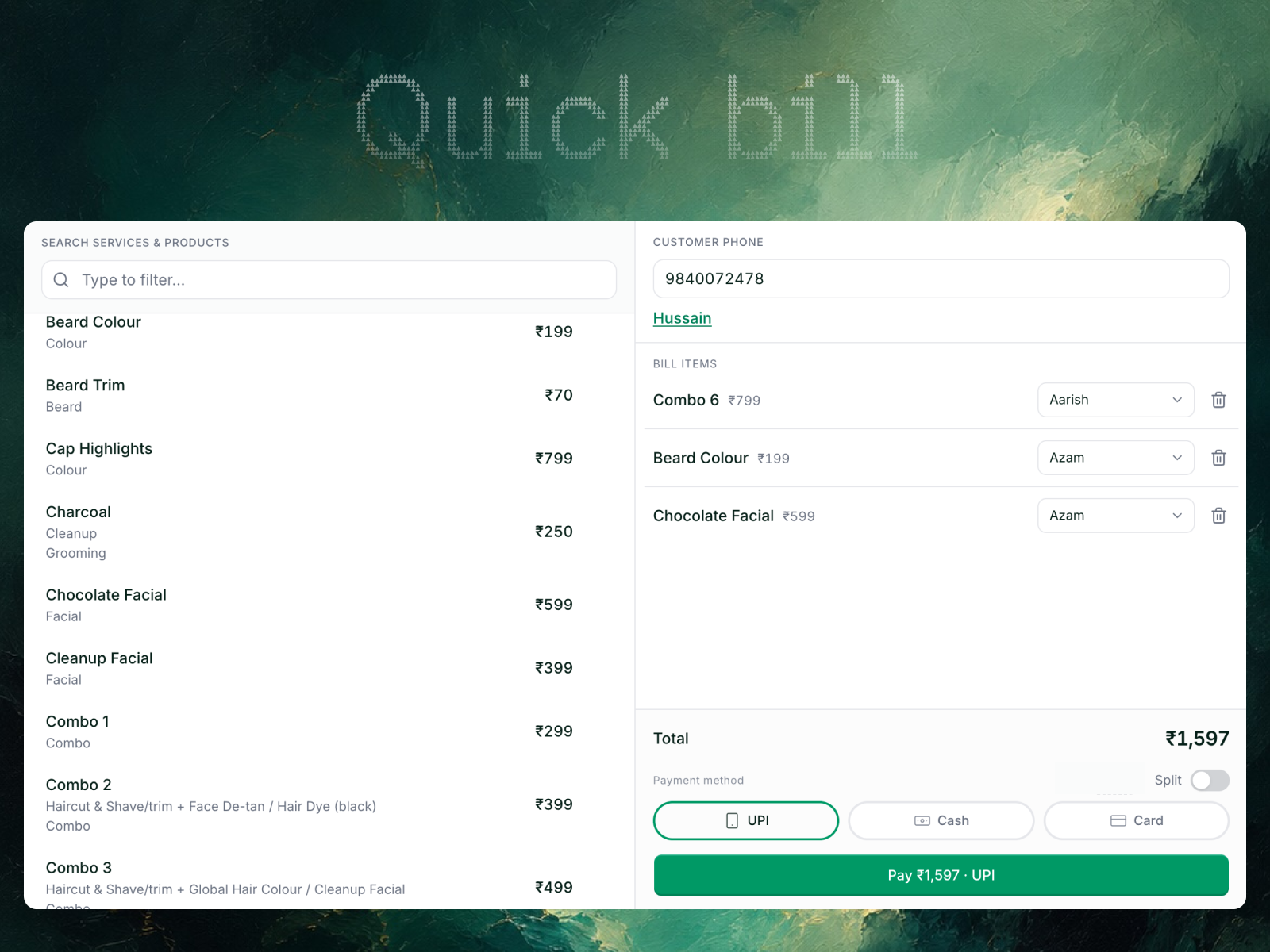
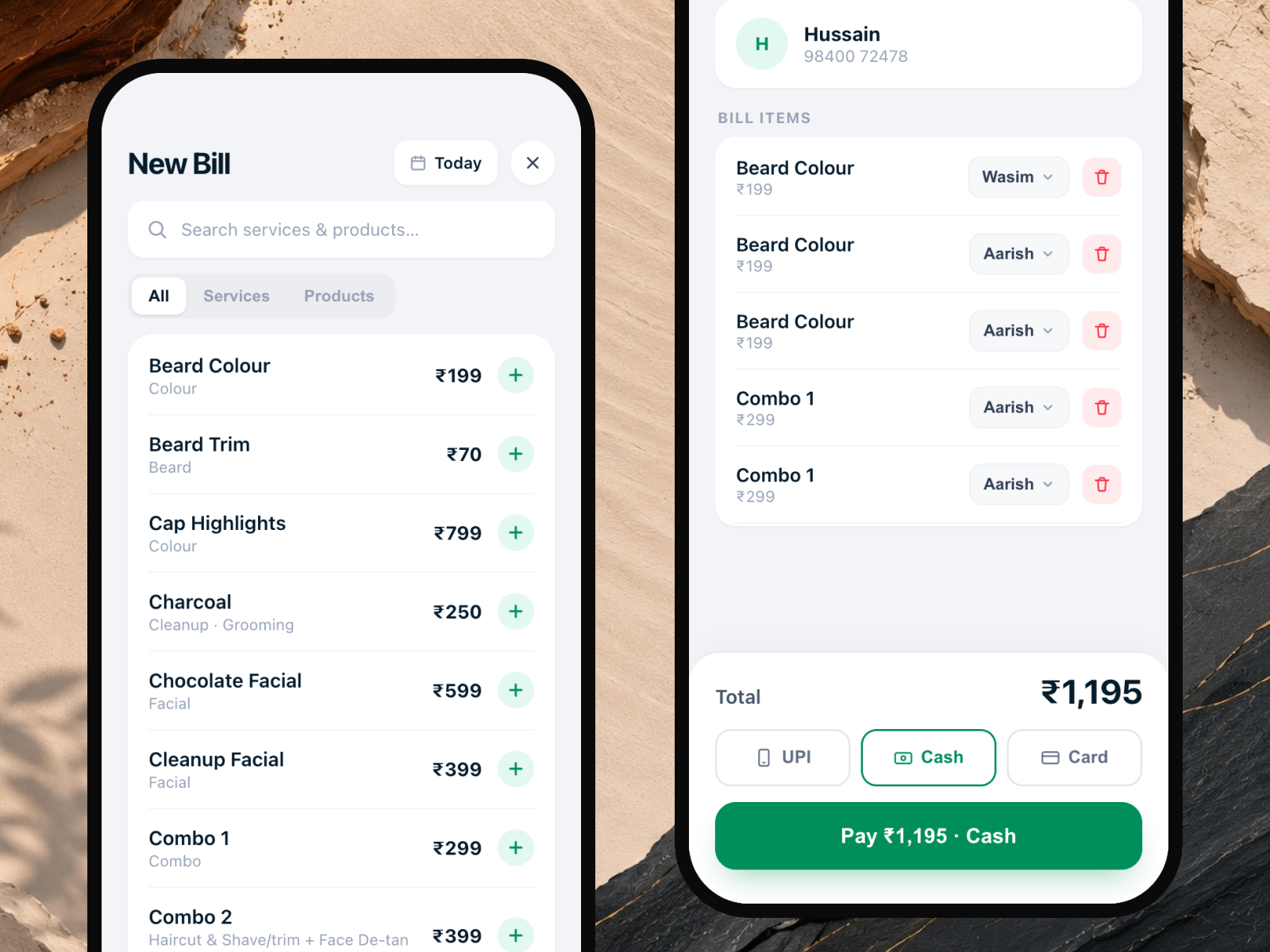
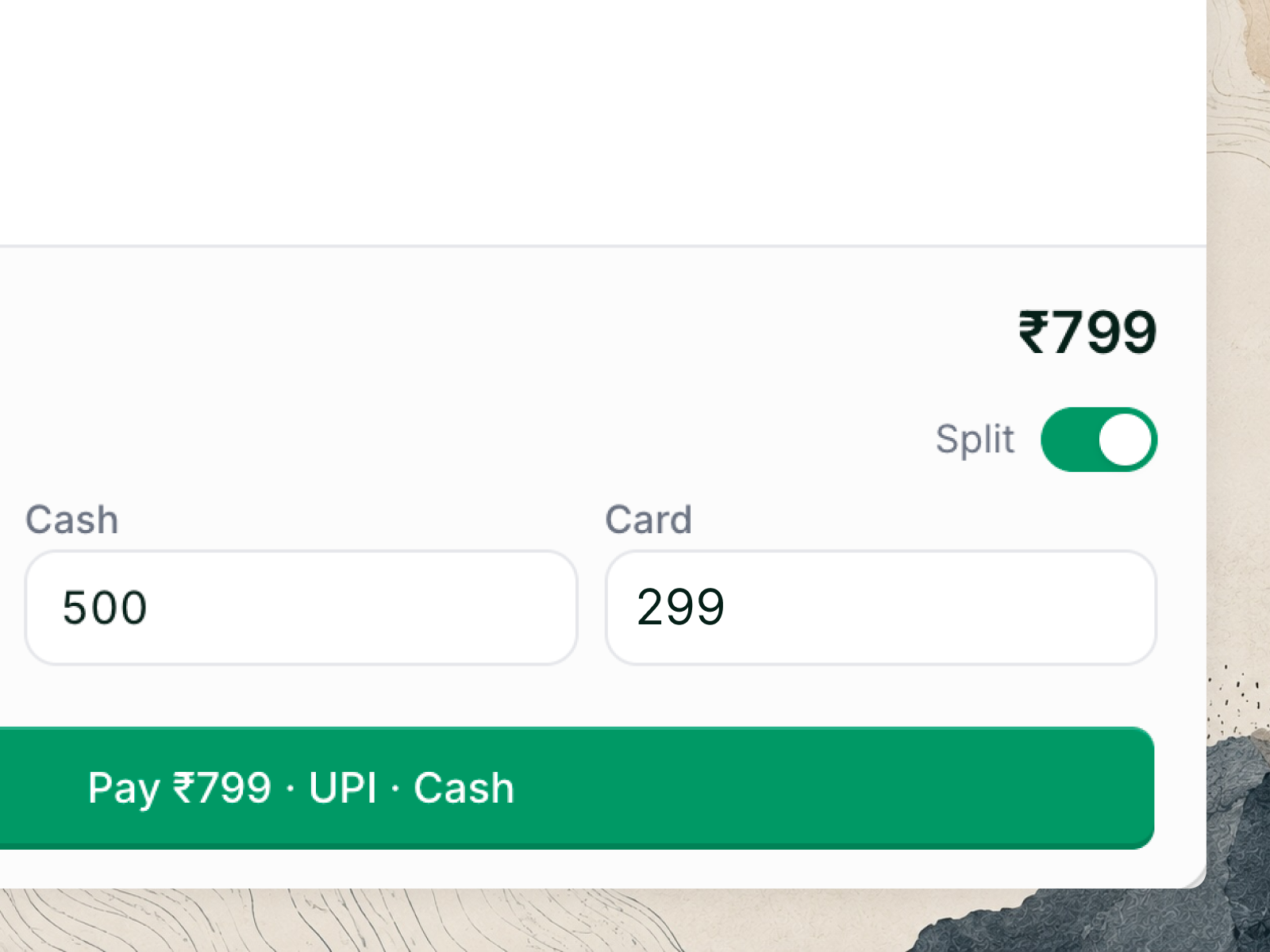
Progressive disclosure — discounts, splits, and tips stay hidden until invoked.
Core flows — operations
Payroll that computes itself. A cash drawer the owner can trust from home.
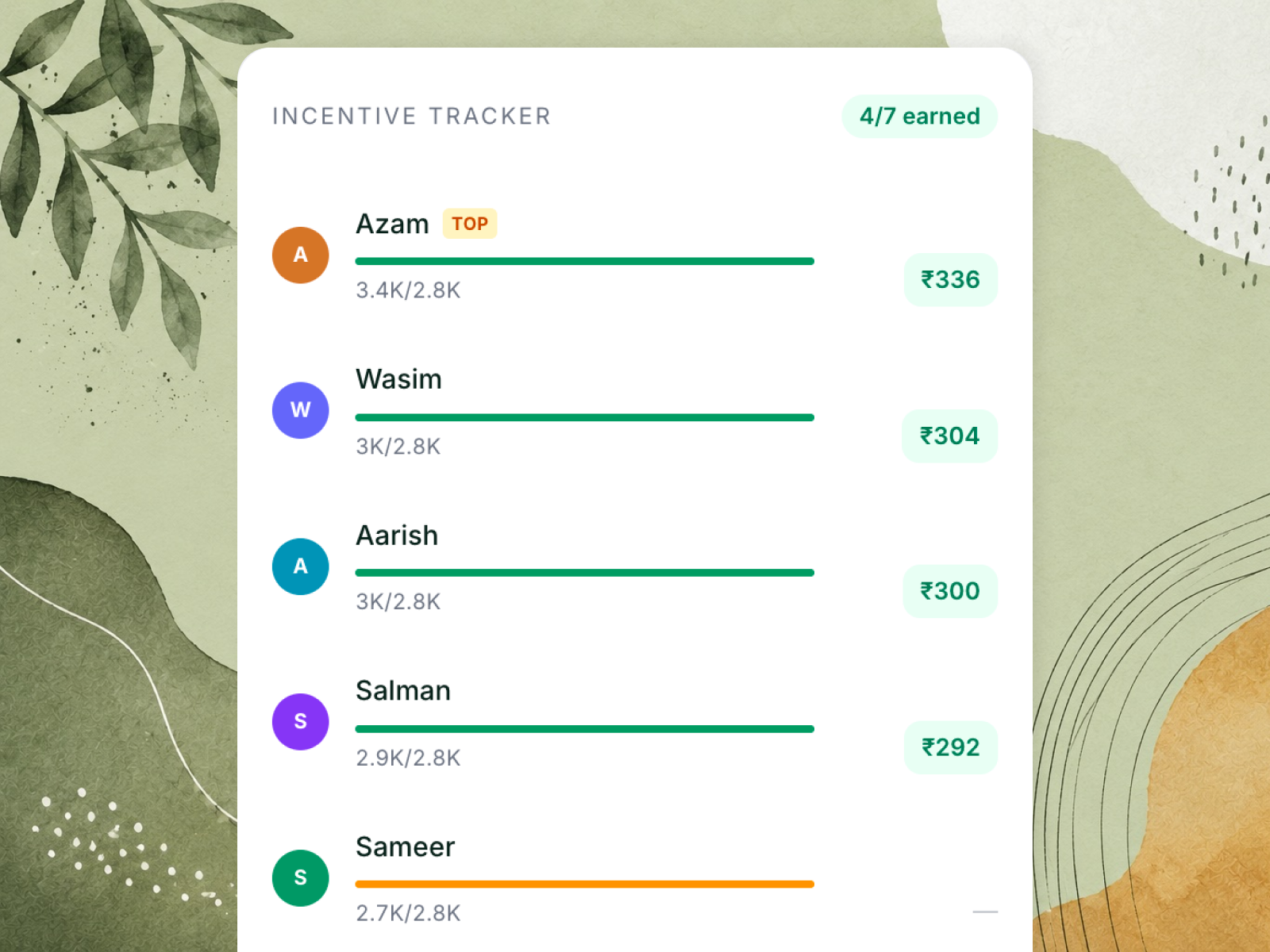
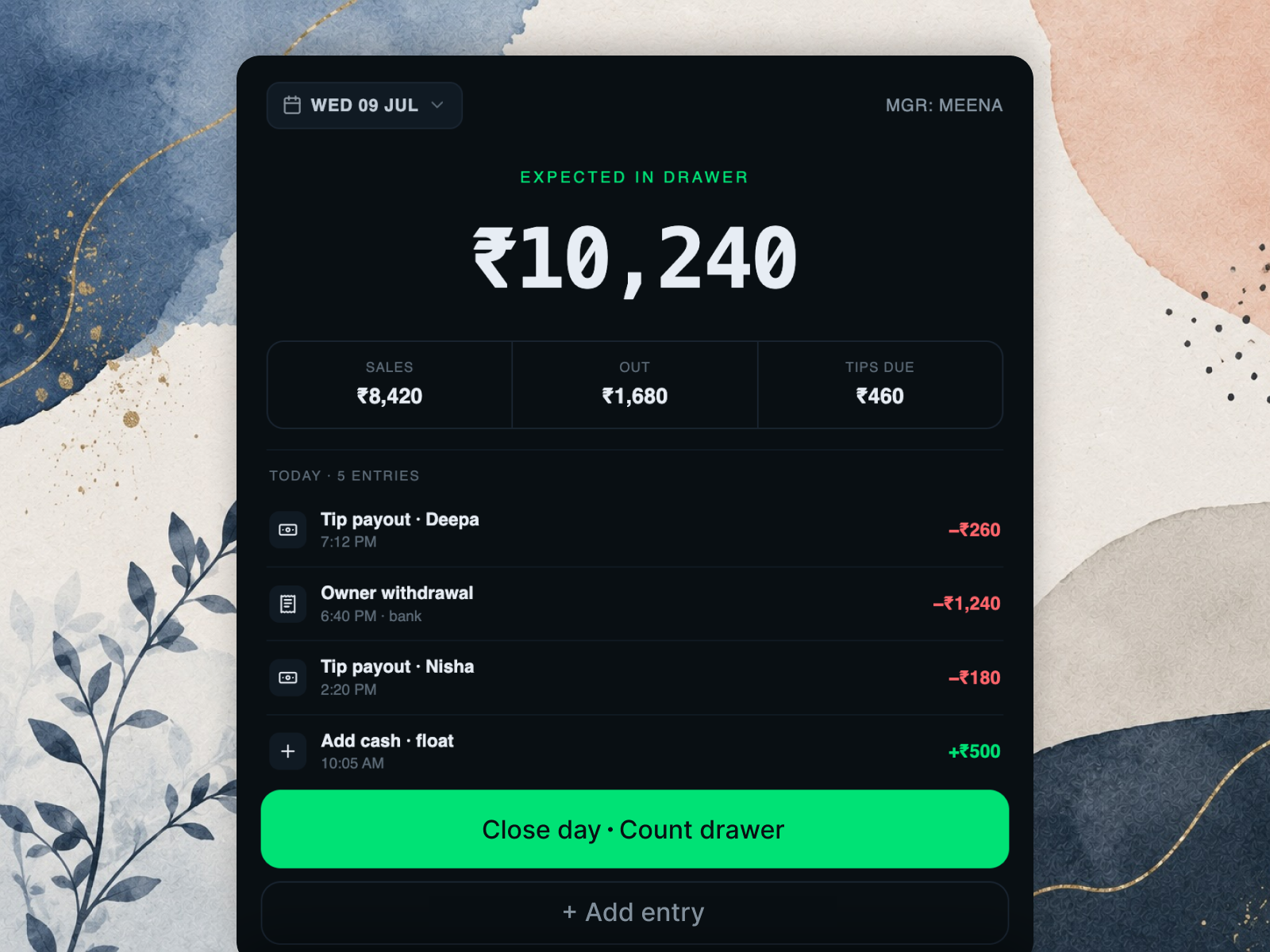
Every number traces back to a bill — nothing is hand-entered, nothing to dispute.
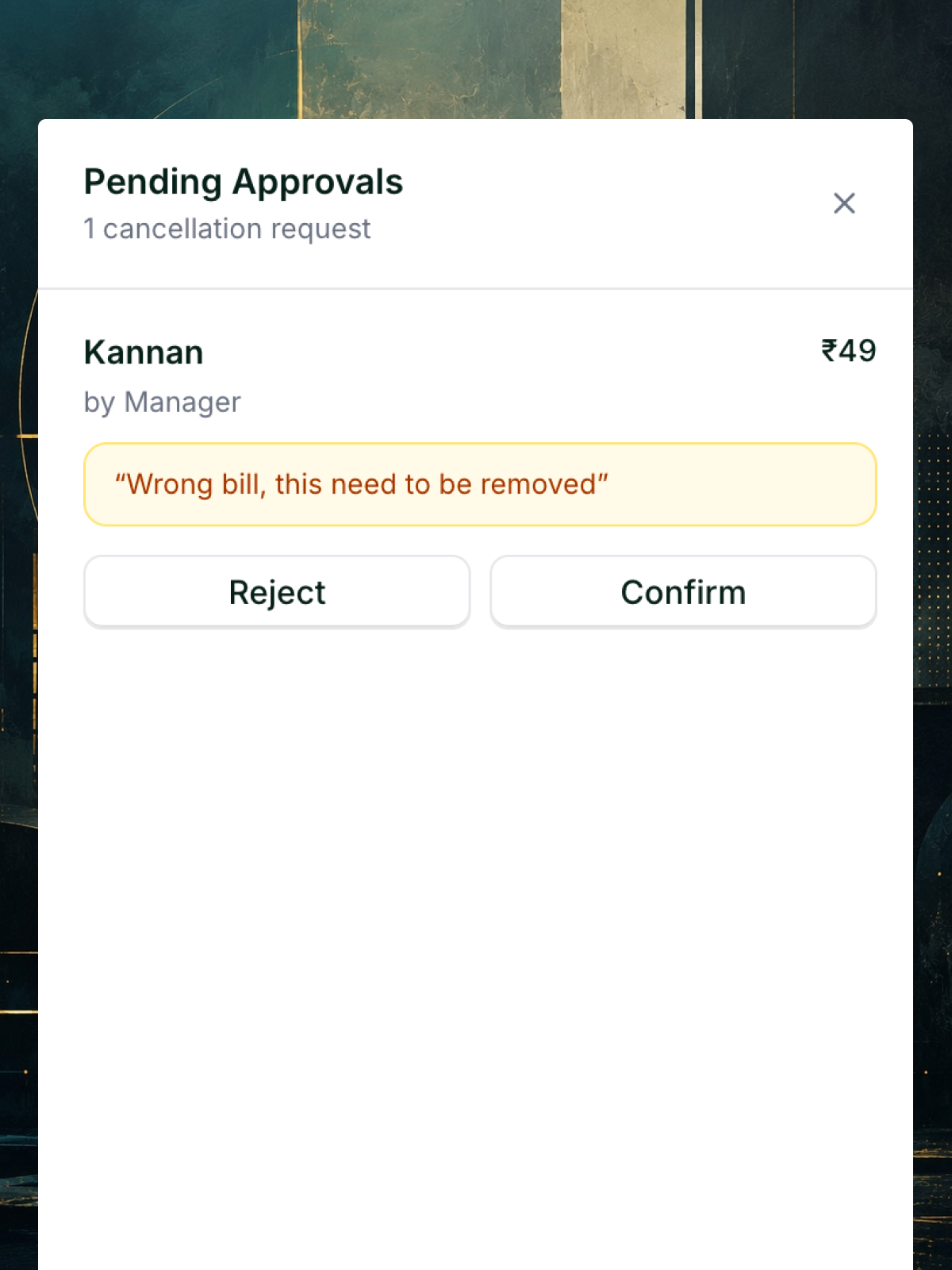
Core flows — owner at a distance
Approvals, alerts, and reports — without the owner on-site.
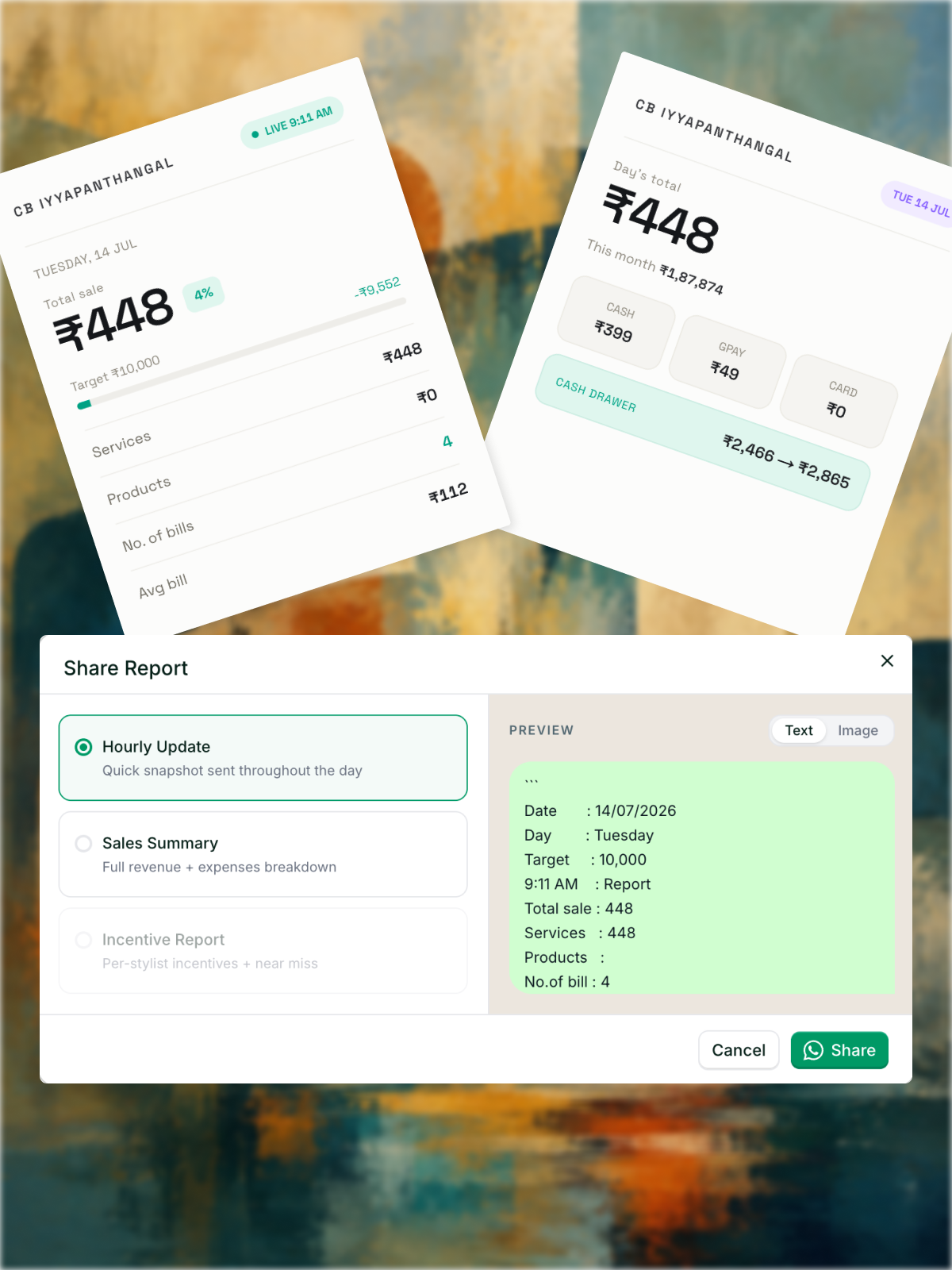
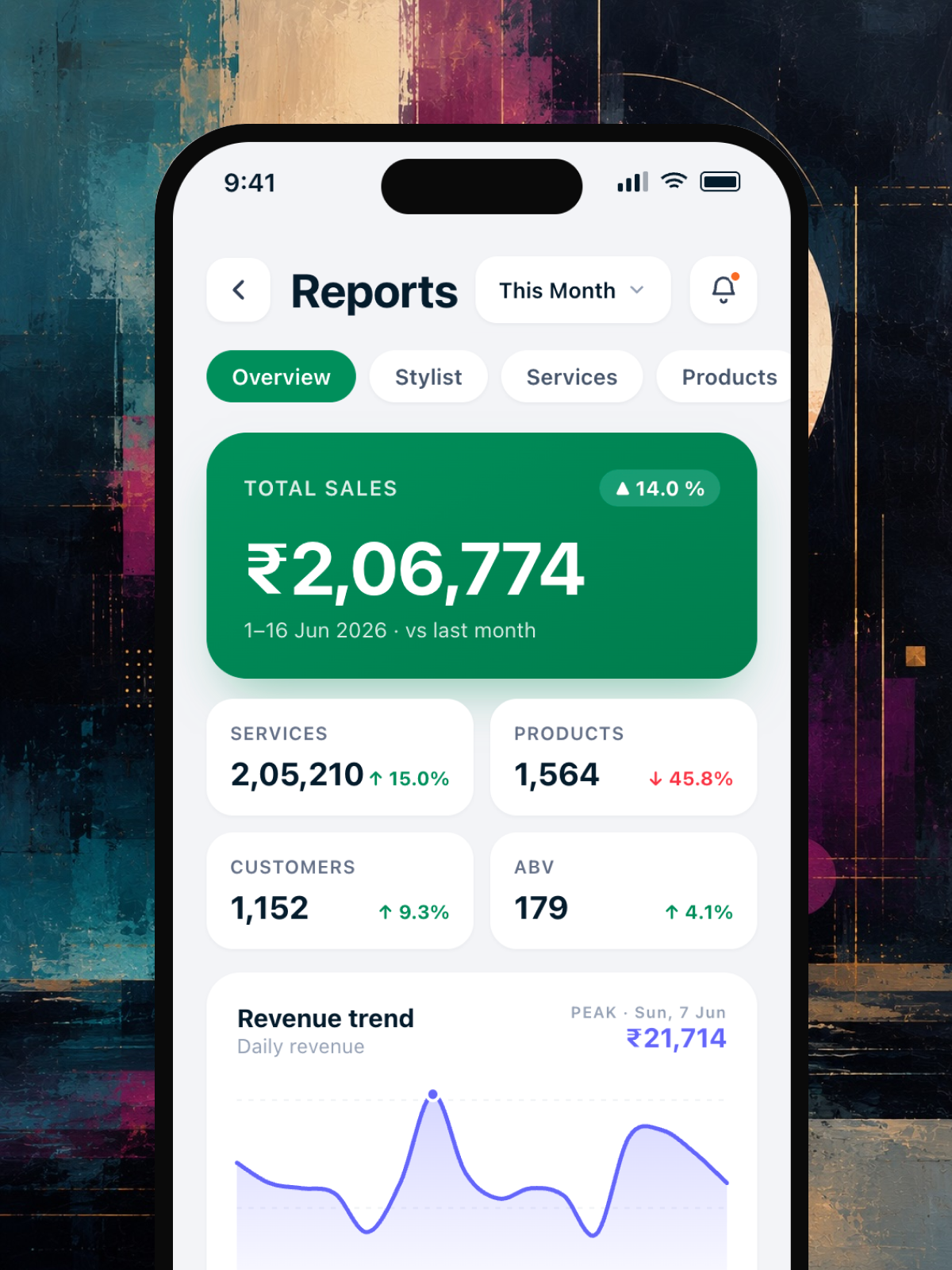
Also shipped
The rest of the salon day, covered.
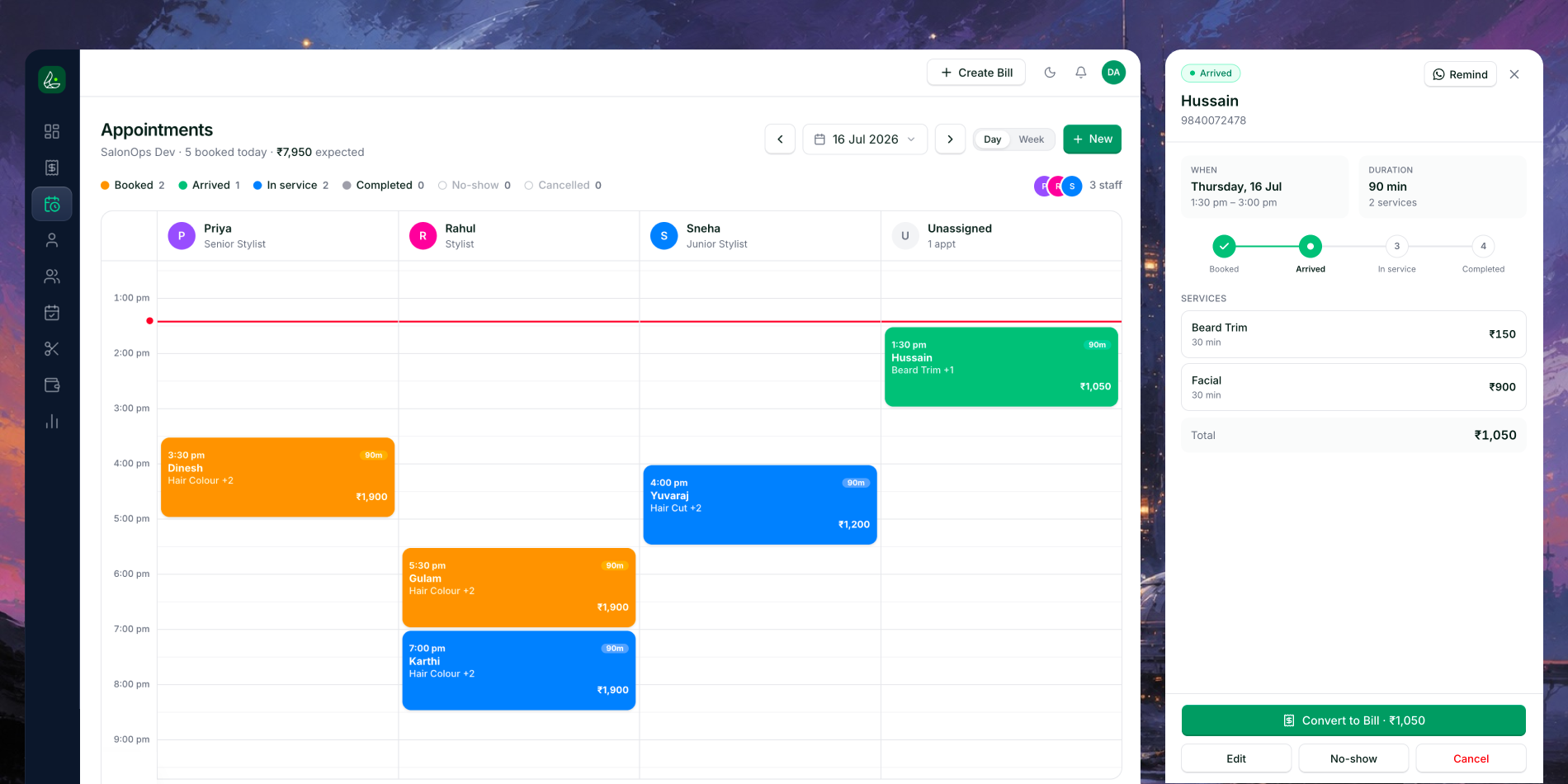
Appointments — a light booking layer; most salon traffic walks in, so appointments assist the day instead of running it.
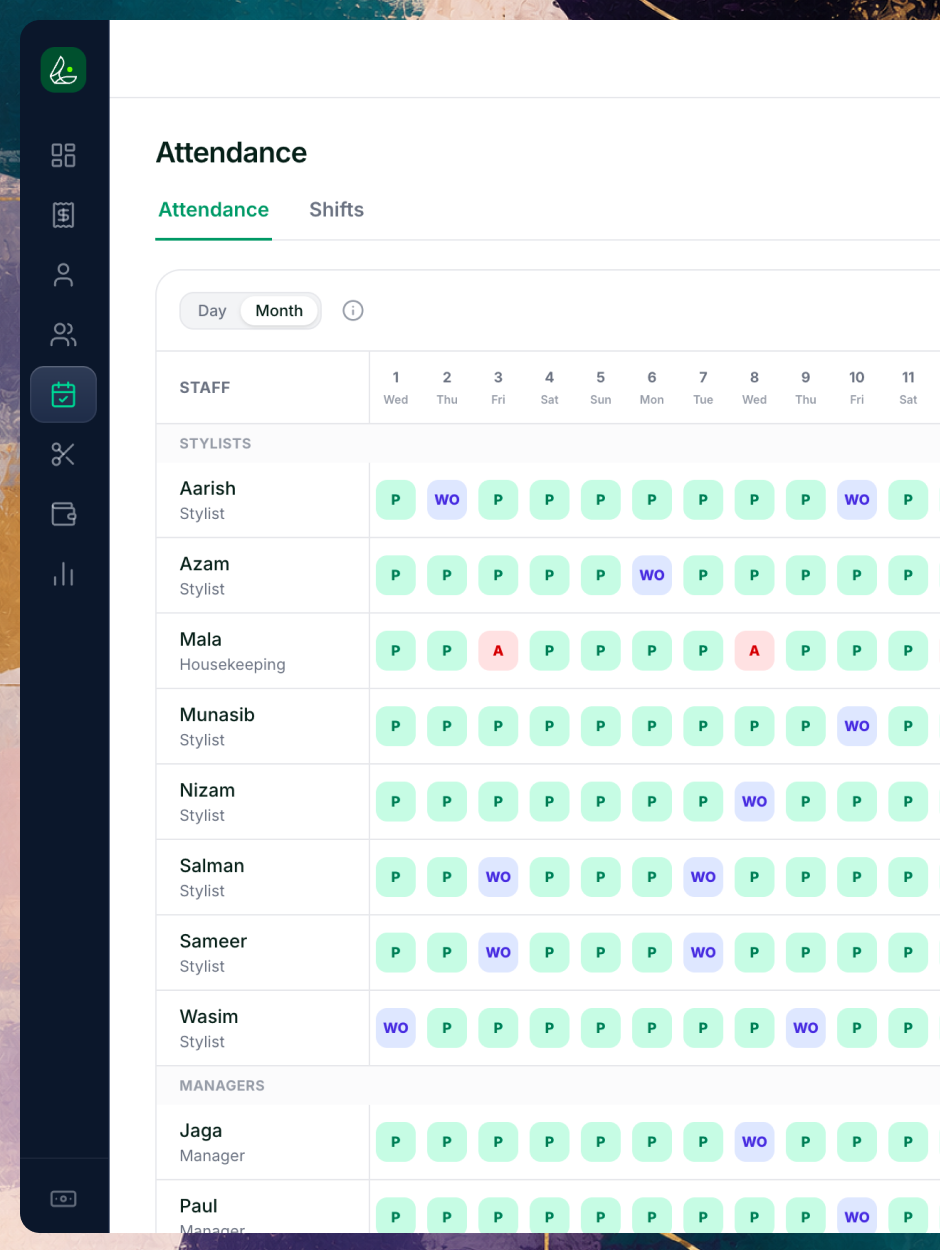
Attendance — staff check in and out at the front desk, feeding payroll and incentives with zero re-entry.
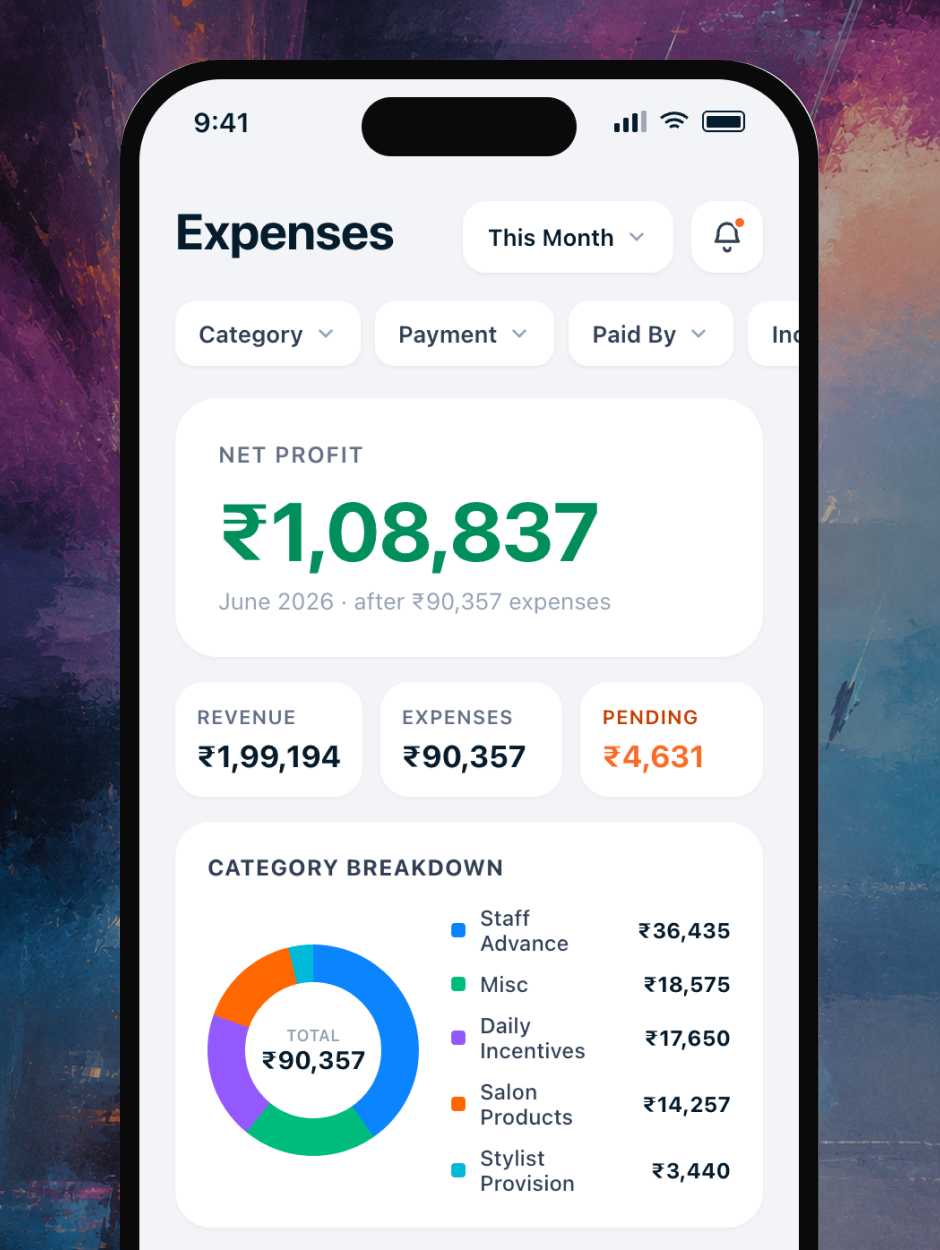
Expenses — every expense logged where the money moves, feeding straight into the cash drawer and reports.
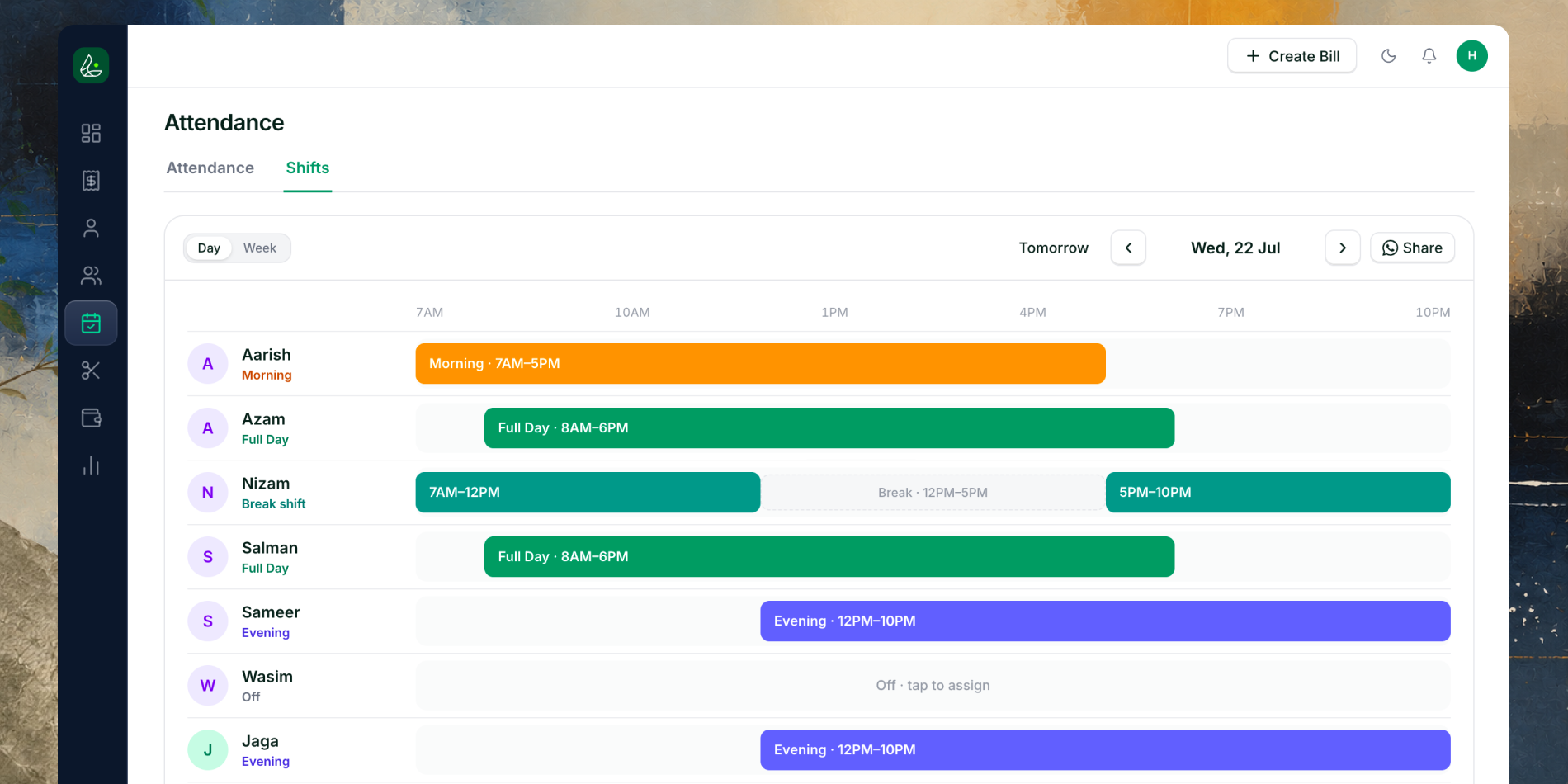
Shifts — open and close the day in one action; the cash drawer and reports snap to the shift.
Design decisions
Choices I’d defend in a review.
Bespoke mobile screens, not breakpoints
Mobile salon UX is a different shape. 12 dedicated components, logic shared underneath.
Killed our own feature
Built a “Confirm Day” ritual, watched it add friction, deleted it. Shipping the deletion mattered more.
Docs as the second teammate
Living roadmap + conventions + tokens let AI agents build without re-deriving context.
PWA, not a native app
One codebase for a team of two. Installs on the front-desk Android; fixes ship the moment we deploy — no app-store cycle.
Outcome
It worked. It didn’t scale. That taught me the most.
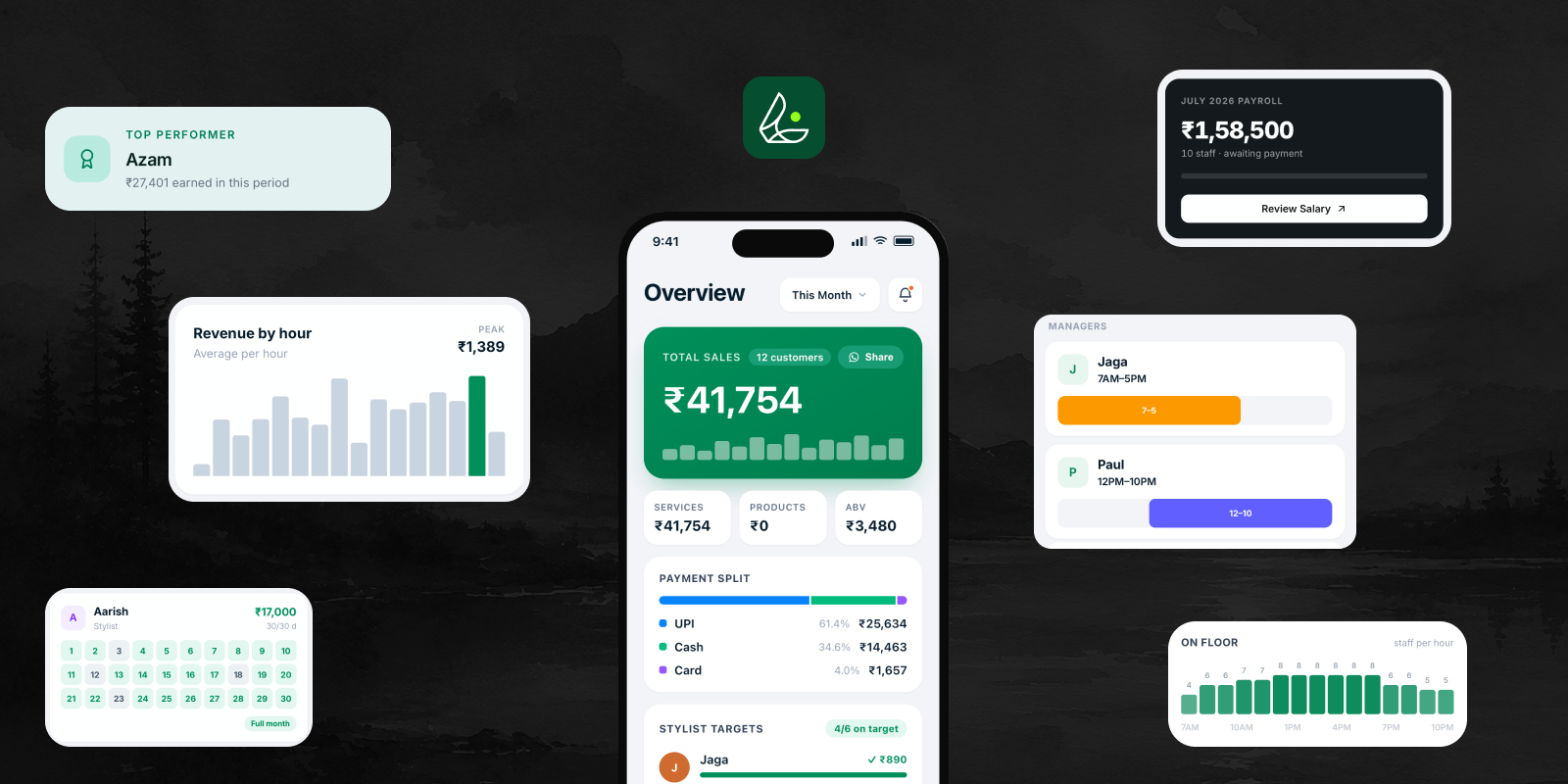
A real salon runs its money through Limvo every day — billing, payroll, the cash drawer.
The honest part:we engineered for scale we hadn’t earned — the bottleneck was customers, not code. Next time: gate engineering behind demand, not ambition. Cheapest expensive lesson I’ve had, this early.